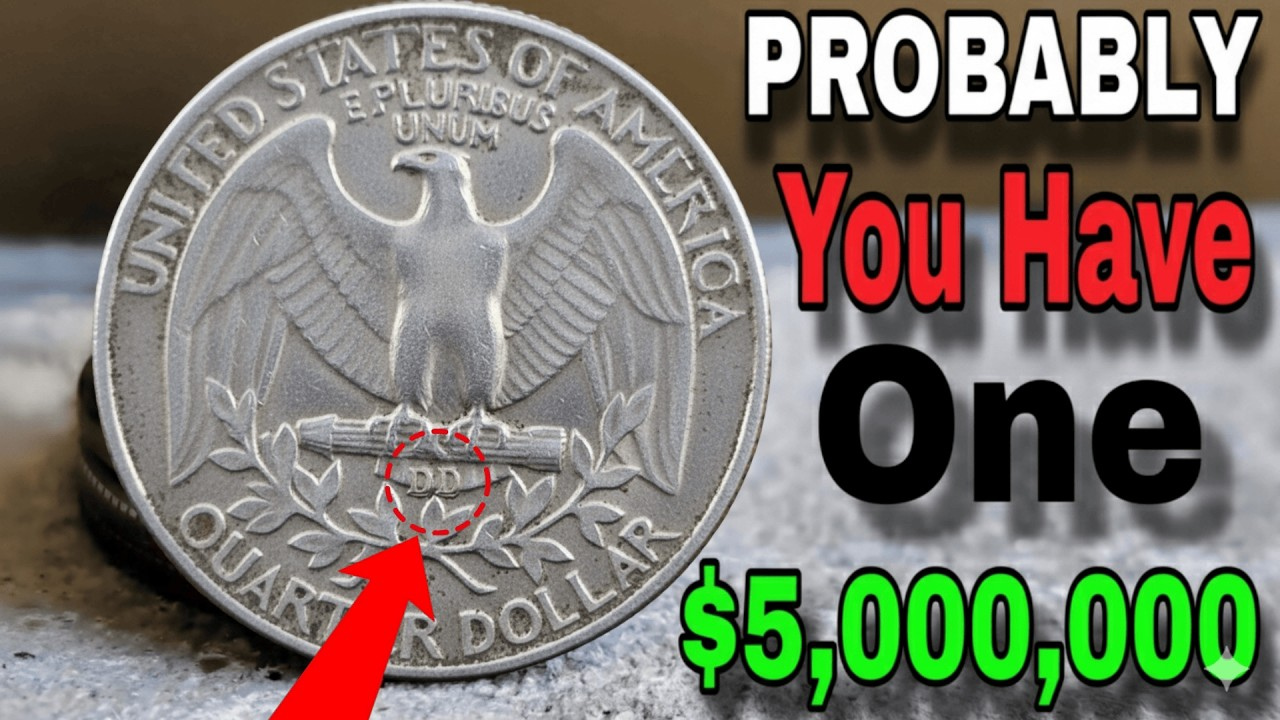
Dirty Old Quarter:Have you ever taken the money out of your pocket and wondered if one of these coins could be worth anything? One lucky collector recently discovered just that – a simple, slightly dirty 25-cent coin, a US coin, sold at auction for $475,000. Yes, you read that correctly – nearly half a million dollars for a coin that most people wouldn’t even look at.
So, what makes this “dirty old coin” so valuable? Let’s explore this incredible story, the reasons behind its astonishing value, and how you can investigate the hidden treasures in your coins.
The Coin That Surprised Collectors
This coin is a rare mint error coin from 1932, the first year of circulation for the Washington Quarter. Although millions of these coins were produced, only a few were struck with this rare mint error, making them extremely popular among collectors. This particular coin had a double obverse, meaning that the figure of George Washington and the inscription on it were struck twice—slightly offset.
Even more interesting is that this coin had been in circulation for decades. Its surface showed signs of wear, dirt, and everyday use—it had clearly passed through countless pockets, cash registers, and vending machines. But a collector’s trained eye recognized this rare doubling effect, confirmed it through a grading service, and the rest is history.
At auction, competitive bidding drove its price to $475,000, surprising even seasoned numismatists.
Why Some Coins Are So Valuable
Not every old coin is valuable—in fact, most coins aren’t. But certain features can transform even a simple coin into a small treasure. Experts consider these factors:
- Minting Defects—Coins with flaws like double strikes, off-center designs, or missing elements are collectible.
- Low Mintage—The fewer coins produced in a particular year or from a particular mint, the higher their value.
- Condition (Grade)—Coins in uncirculated or mint condition are more valuable, but as recent sales have shown, even worn coins can fetch incredible sums if they are rare enough.
- Historical Significance—Coins from the first year of issue or those associated with special events often hold extra value.
- Metal Composition—Old coins minted before 1965 contain 90% silver, giving them an intrinsic metal value higher than their face value.
How to Know if You Have a Rare Coin
You don’t need an expert to start your search. Here’s a simple checklist:
Look at the year — Coins minted before 1965 are silver and already valuable.
- Look at the mint mark — Letters like “D” (Denver), “S” (San Francisco), or “P” (Philadelphia) below “In God We Trust” or near the date may indicate rarity.
- Check closely for errors — Look for double images, misaligned text, or unusual edges.
- Weigh — Mint errors sometimes result in incorrect weights or planchets (metal blank coins).
- Research and Verify — If you think you have something special, use coin forums or professional grading services like PCGS or NGC for verification.
Remember, many of the most valuable coins were once considered ordinary—until someone took a closer look at them.
Why People Love Coin Collecting
Collecting coins isn’t just a hobby—it’s a glimpse into history. Each coin tells a story about its minting year, the chosen design, and even the political or economic climate of the time. Collectors often describe the thrill of finding a rare coin as being like discovering hidden treasure.
With news stories like the $475,000 coin making headlines, more and more people are paying attention to their remaining money. And who can blame them? You never know what might be hidden in a drawer or a forgotten piggy bank.
Final Thoughts
A $475,000 “dirty old coin” proves that treasure truly can be hidden in plain sight. While most of us think of coins as small, everyday objects, collectors see history in them—and sometimes, great value. So the next time you’re handed change at the gas station or find your hand in an old coin jar, try to look closely.
Your next coin might not just buy you gumballs—it might even buy you a house.
FAQs
Q: What year quarter sold for $475,000?
A: The coin was a 1932 Washington quarter with a rare double-die error.
Q: How can I tell if my quarter is valuable?
A: Check for mint errors, unusual markings, or dates before 1965 (silver coins). If unsure, consult a coin grading service.
Q: Are all old quarters worth money?
A: No, only specific rare dates, mint marks, or error coins hold high collector value.
Q: Can I sell my rare coin directly to collectors?
A: Yes. Auction houses, online marketplaces like Heritage Auctions, or professional coin dealers can help you sell authentic rare coins.
Q: Should I clean my coin before selling it?
A: Absolutely not. Cleaning can damage its surface and reduce value dramatically. Always have it appraised first.