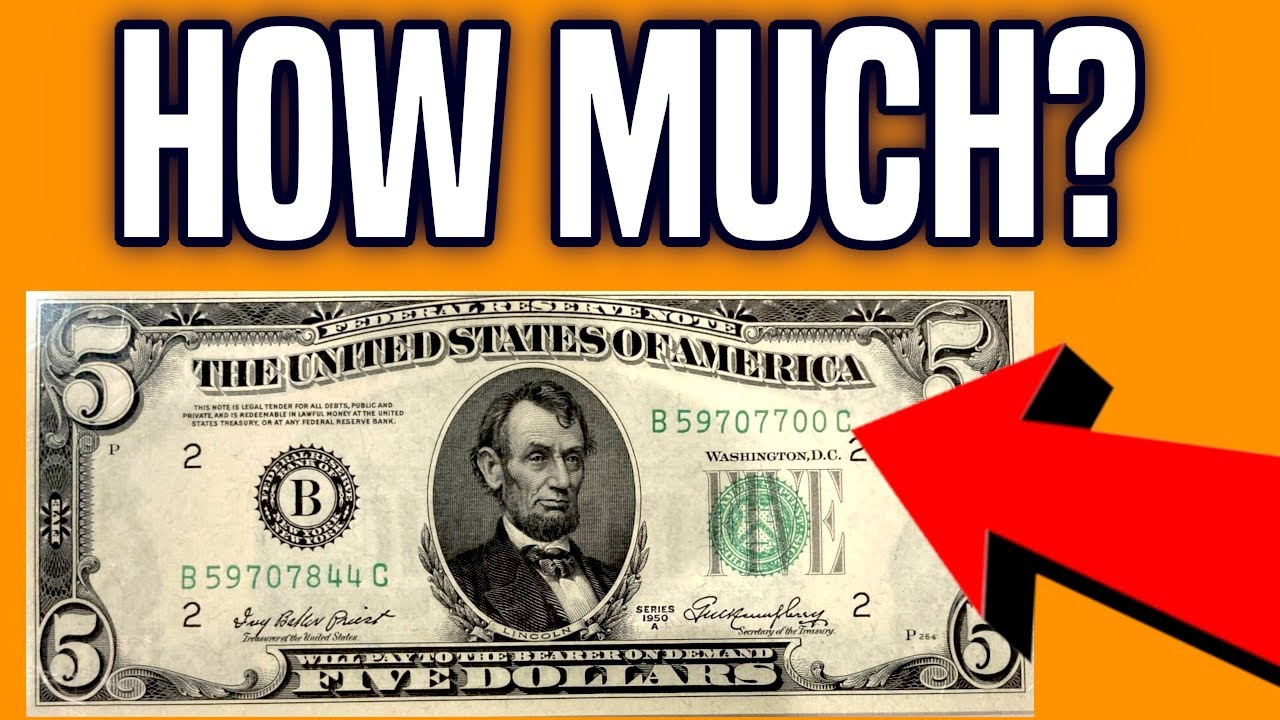
1995 $5 Bill:Sometimes, the most unexpected treasures are found in places we least expect—even in the folds of an old wallet or a forgotten drawer. Such is the case with a rare 1995 $5 note stamped upside down. It’s a printing error that’s turning ordinary cash into valuable collectibles. Believe it or not, some of these notes have sold for up to $3,500, making them one of the most interesting finds in the history of American currency.
If you’ve ever handled old notes or have a habit of saving old notes, now might be the perfect time to take a closer look—because these seemingly ordinary $5 notes could actually be worth a small fortune.
How the Rare 1995 $5 Note Came to Be
The 1995 $5 note with its upside-down seal is one of the rare printing errors that escaped the attention of the U.S. Bureau of Engraving and Printing. Typically, notes undergo three major printing stages—one for the background, one for the image and text, and one for the seals and serial numbers.
During this process, the Treasury Department seal was printed upside down on a batch of notes—a startling error that is immediately noticeable. Instead of perfectly aligning with Abraham Lincoln’s portrait, the seal appears upside down, creating a strange and rare sight.
Since such printing errors are immediately identified and destroyed during quality checks, only a limited number of these flawed notes ever entered circulation—and that’s why collectors are now spending thousands to acquire one.
What Makes This Note so Valuable?
When it comes to collectibles, rarity and condition determine value—and the $5 note with the reverse seal meets both criteria. Find out why it’s so sought-after:
- Rarity: Only a very small number of $5 notes from the 1995 series are known to exist with this distinctive seal error. The fewer notes available, the higher their value.
- Visible Error: This printing error with the reverse seal is a clear printing error that even non-collectors can recognize. It’s not a subtle flaw—and that’s what makes it exciting.
- Historical Interest: These notes represent a unique chapter in American printing history, demonstrating how even advanced systems can make human errors.
- Condition (Grade): Notes in unprinted or fresh condition can sell for thousands, while worn or crumpled notes can sell for hundreds.
How to Identify a Genuine $5 Note with a Reverse Seal
If you’re wondering whether your $5 note is rare, consider these points:
- Series Year: The note must be from the 1995 series (printed between 1995 and 1997).
- Image: It features a portrait of Abraham Lincoln in the center.
- Seal Position: Look for the green Treasury seal to the right of Lincoln’s portrait. In the flawed version, the seal is clearly upside down, rotated 180 degrees from its normal orientation.
- Serial Numbers: These must be printed correctly – if both the seal and serial number are upside down, it may be a fake.
If your note meets these criteria, you’re in possession of a collector’s dream.
What is its Actual Value?
The value of a 1995 $5 note with the reverse seal depends on its condition, rarity, and demand. Here’s a general estimate:
- Current condition: $500 to $1,000
- Uncirculated: $1,500 to $3,500 or more
- Graded and certified: Some high-grade notes certified by professional services (such as PCGS or PMG) have sold for over $3,500 at auction.
Collectors are always looking for unique items like this, and as awareness grows, prices tend to rise over time.
Where to Sell or Validate Your Bill
If you think you’ve found one, don’t rush to spend it! Here’s what to do next:
- Handle it carefully – don’t fold, tape, or clean the bill.
- Have it authenticated by a professional grading service like PCGS Currency or PMG (Paper Money Guarantee).
- Check online auctions like eBay or Heritage Auctions to see recent selling prices.
- Visit a local coin and currency dealer for a free appraisal or expert opinion.
Why People Love These Rare Items
In a world where everything is digital, finding a rare physical currency note feels like discovering a time capsule. For collectors, a 1995 $5 note with a reverse seal symbolizes not only value but also a story—a printing error that became a treasure.
It’s a reminder that even in perfection-driven systems, small human errors can make something ordinary seem extraordinary. So before handing over that old $5 note at the gas station or cafe, be sure to check its seal.
Who knows? You might be holding a piece of history worth thousands of dollars—a collector’s gem hidden in plain sight, waiting to be rediscovered.