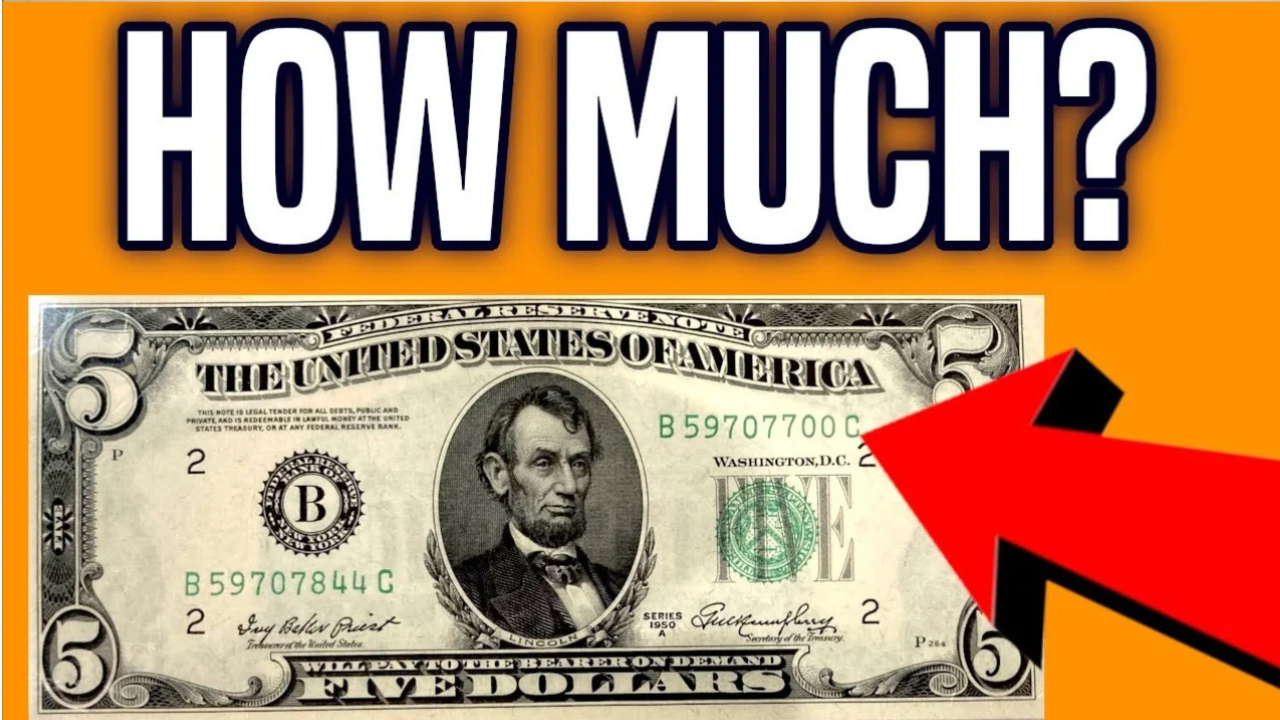
1995 $5 Bill :There might be a small fortune hidden in your wallet or in an old drawer. It may seem unbelievable, but it’s true. Some upside-down 5-dollar bills from 1995 are attracting the attention of collectors and numismatists across the country—and they’re worth far more than their face value.
While most of us handle money without much attention, such rare printing mistakes can turn an ordinary note into a collector’s prize. If you want to know if your old 5-dollar bill could be worth hundreds (or thousands) of dollars, here’s how to recognize the signs, understand its value, and what to do next.
The Story Behind the Error on the 1995 $5 Note
In the world of paper currency, errors are more common than you might expect—but very few ever make it into public circulation. The 1995 series $5 note is one such rare item that managed to escape the rigorous inspection process of the U.S. Bureau of Engraving and Printing.
During the printing of some batches, the U.S. Treasury seal, usually printed in green on the right side of the note, was accidentally placed upside down. This mistake went unnoticed and entered circulation, making a simple production error a part of numismatic history.
These rare notes are from the 1995 Federal Reserve Note series, featuring a portrait of Abraham Lincoln on the front and the Lincoln Memorial on the back. The upside-down seal error makes them easily recognizable—but also easy to miss if you’re not looking carefully.
How to Identify an Upside-Down Seal
Before rushing to check your wallet, it’s important to know what to look for. Here’s how to identify a genuine upside-down seal error on a 1995 $5 note:
- Series Year – The note should have “Series 1995” written on the right side, just below the Treasury Secretary’s signature.
- Seal Condition – On genuine notes, the green Treasury seal is printed upright, centered, and level. In the defective version, the seal appears rotated 180 degrees, meaning it is upside-down relative to the rest of the design.
- Color and Condition – The seal should still be bright green and clearly visible. Worn or faded notes may still hold value, but their condition plays a major role in determining the price.
- Federal Reserve District Letter – Look for the black circular Federal Reserve seal on the left. Some notes with inverted seals are more common in specific districts, such as “B” (New York) or “L” (San Francisco).
Serial Numbers – Serial numbers will appear normal and straight, which helps confirm that the seal—not the entire note—is misaligned.
How much is it worth?
The value of a 1995 $5 note with a reverse seal depends on its rarity, condition, and collector demand. While not every misprinted note is a jackpot, some examples have sold for impressive prices at auctions and private sales.
- Customer condition: $100 to $300
- Unclear, unprinted condition: $400 to $1,200
- Exceptional examples (rare district, nearly perfect seal reverse): up to $2,000 or more
Collectors love flawed notes because they are tangible evidence of how human error can evade one of the world’s most secure printing systems. And as fewer flawed notes remain in circulation, their value continues to rise.
How to Verify Authenticity
If you think you’ve found one of these notes, avoid spending it. Instead, follow these steps:
- Check the paper and ink – Genuine notes have a unique paper texture and are coated with security fibers.
- Use a magnifying glass – The details on genuine notes are clear and precise, while counterfeit notes may appear blurred at the edges.
- Seek professional advice – Take it to a numismatist or local coin dealer. They can verify the authenticity of your note and estimate its market value.
- Avoid online scams – Don’t fall for websites promising to “verify” notes for a fee. Always contact reputable experts or auction companies like Heritage Auctions or Stacks Bowers.
Where to Sell or Keep It Safe
If verified, you have two options: sell it or keep it.
- To Sell: Use platforms like eBay, Heritage Auctions, or Collectors Forum to list your bill. Include clear, high-resolution photos showing the reverse seal and series year.
- To Keep: Store it in a currency sleeve or holder to protect it from wear, moisture, and sunlight. Over time, the bill’s value may increase, making it a smart collectible investment.
Why People Love Error Notes
Beyond the money, it’s also interesting to own a piece of history that shouldn’t exist. Error notes like the 1995 $5 reverse seal note tell a story—a moment when precision failed and a small oversight created something extraordinary.
For collectors, it’s a symbol of rarity and curiosity; for others, it’s a lucky find that’s clearly in plain sight.
Final Thoughts
Before handing over that old $5 note at the gas station or coffee shop, take a closer look—you might be holding a valuable collectible. That 1995 $5 note with the reverse seal is a reminder that precious things can be found even in the most ordinary places.
So, the next time you look in your pocket for money, look with a little curiosity. Who knows—that little piece of paper might turn out to be worth more than $5.